
April 6, 2026
Design-Build vs. General Contractor: What San Francisco Homeowners Should Know
Planning a home remodel in San Francisco often begins with one major question: who should manage the project? For many homeowners, the choice comes down to hiring a traditional general contractor or working with a design-build firm.
At first, the difference might look small. Both options can help make your remodel happen. Both handle construction, work with trades, manage materials, budgets, and schedules. But in reality, these two approaches can lead to very different remodeling experiences, especially in a city as complex as San Francisco.
Learning about the differences between design-build and general contractor models in San Francisco can help homeowners pick the right path before spending time, money, and energy on a big renovation.
No matter if you are remodeling a kitchen, updating a bathroom, modernizing a Victorian, renovating a condo, or planning a whole-home makeover, how you manage the project matters. It affects communication, pricing, timelines, accountability, permits, and your overall stress level.
This guide breaks down the main differences between design-build and general contractor remodeling so San Francisco homeowners can make a confident, informed choice.
What Is a General Contractor?
A general contractor manages the construction part of a remodel. After an architect or designer creates the plans, the general contractor usually steps in to estimate the work, hire subcontractors, schedule trades, order materials, coordinate inspections, and oversee the building process.
In a traditional remodeling model, the homeowner usually works with separate parties:
- Architect or designer
- Structural engineer
- General contractor
- Specialty subcontractors
- City permitting departments
- Sometimes an interior designer or project manager
This process is often called design-bid-build. The design is completed first, then contractors bid on the finished plans, and construction begins once a contractor is selected.
A general contractor works well when the plans are finished, the project scope is clear, and the homeowner already has a design team. But in San Francisco, with its older homes, permit delays, unexpected structural issues, and neighborhood rules, the traditional model can lead to communication lapses if the design and construction teams are not closely connected.
What Is Design-Build?
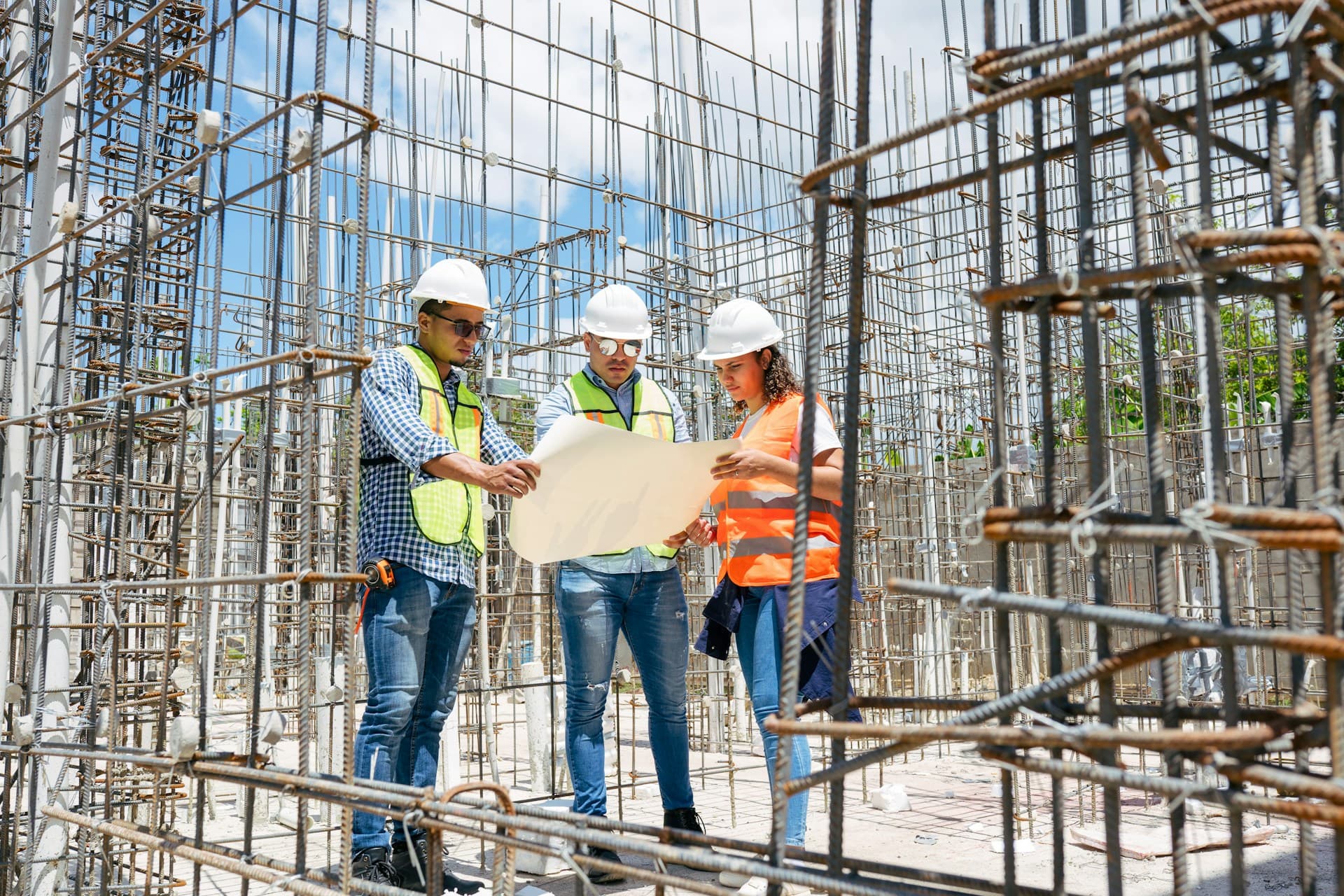
Design-build is a remodeling approach where one team handles both design and construction. Instead of hiring separate companies, the homeowner works with a single design-build firm from the first planning steps to the finished project.
A design-build firm typically coordinates:
- Initial project goals and feasibility
- Space planning and design concepts
- Budget development
- Engineering coordination
- Permitting strategy
- Material guidance
- Construction management
- Final walkthrough and completion
The main advantage is that everyone is on the same page. Designers, builders, estimators, and project managers work together from the start, which helps avoid surprises later on.
For homeowners looking at design-build versus general contractor options in San Francisco, the biggest difference is timing. A general contractor usually comes in after the design is done, while a design-build firm helps shape the project from the very start.
Why the Difference Matters in San Francisco
Remodeling in San Francisco is challenging. Homes are often old, lots are small, building codes are strict, and getting permits can take a long time. Many properties also have unique issues like:
- Victorian or Edwardian construction
- Aging plumbing and electrical systems
- Load-bearing walls in unexpected places
- Seismic requirements
- HOA restrictions for condos
- Narrow streets and limited site access
- Neighbor notification concerns
- Historic preservation considerations
- Small footprints that require creative planning
Because of these problems, having designers and builders work together early on can make a big difference.
A great design only works if it can get permits, is priced right, and can be built efficiently. This is where the design-build model often has a big advantage.
Key Difference #1: When the Builder Gets Involved
In the traditional general contractor model, the builder usually gets involved after the architectural drawings are finished. At that stage, the homeowner might find out the design costs too much, is hard to build, or could cause permit problems.
This can mean having to redesign, get new bids, and deal with delays.
With design-build, the construction team is involved during early planning. That means the builder can provide input on:
- Structural feasibility
- Material costs
- Construction sequencing
- Permit risks
- Timeline expectations
- Value engineering opportunities
- Budget alignment
For San Francisco homeowners, getting this input early is especially helpful. If removing a wall needs major structural work or moving plumbing in a condo will cause HOA issues, it is best to know ahead of finalizing the plans.
Key Difference #2: Budget Accuracy
Unexpected costs are one of the biggest frustrations in remodeling.
In the general contractor model, homeowners may spend months developing architectural plans only to discover during bidding that the project costs far more than expected. This happens because design decisions are often made before construction pricing is fully understood.
The design-build model helps solve this problem by integrating budgeting into the design process.
Instead of designing first and figuring out the price later, design-build teams look at costs as the project develops. This helps homeowners make smart choices about layout, finishes, systems, and scope before construction starts.
For example, during a kitchen remodel, a design-build team can explain the cost difference between:
- Keeping appliances in their current locations
- Moving plumbing or gas lines
- Removing a load-bearing wall
- Adding custom cabinetry
- Selecting premium stone vs. engineered surfaces
- Expanding the footprint
This does not remove all surprises, especially in older San Francisco homes, but it does give a more realistic idea of costs.
Key Difference #3: Communication
A traditional remodel can involve several companies, each with their own contracts, schedules, priorities, and ways of communicating. If a question comes up during construction, the contractor might need to ask the architect, who might then need to check with the engineer. The homeowner often ends up passing messages between everyone.
This can slow progress and create frustration.
Design-build makes communication easier because the homeowner works with one main team and a coordinated process. Questions get answered faster since the design and construction people are already working together.
That matters during moments like:
- Discovering outdated wiring behind a wall
- Adjusting cabinet dimensions
- Resolving inspection comments
- Making finish substitutions
- Responding to permit revisions
- Coordinating structural changes
When a remodel moves quickly, good communication helps avoid delays.
Key Difference #4: Accountability
With separate design and construction teams, accountability can become unclear when problems arise.
If the design is difficult to build, the contractor may point to the plans. If construction costs go beyond expectations, the designer may point to market pricing. If details are missing, the homeowner may be left coordinating solutions.
With design-build, one firm handles the whole process. This makes it clear who is responsible from start to finish.
For San Francisco homeowners taking on a big remodel, having one team in charge can be reassuring. The same team that designs the project also builds it, which leads to practical design choices from the beginning.
Key Difference #5: Timeline Efficiency
When comparing timelines for design-build and general contractor remodels in San Francisco, design-build often moves faster because different phases can overlap.
In a traditional process, the sequence usually looks like this:
- Hire an architect or designer.
- Develop plans
- Complete engineering
- Send plans to contractors for bids.
- Compare estimates
- Revise plans if bids are too high.
- Apply for permits
- Begin construction
Each step depends on the one before it.
In a design-build process, budgeting, feasibility checks, engineering, and construction planning can all happen earlier and with more teamwork. This helps reduce downtime between steps and keeps the project moving smoothly.
This does not mean design-build can skip San Francisco’s permitting timelines. No good firm can promise that. But design-build can help avoid delays caused by incomplete plans, unrealistic designs, or teams that are not working together.
Key Difference #6: Flexibility During Construction
Even with careful planning, remodeling always brings surprises, especially in San Francisco’s older homes. Once walls are opened, contractors might find:
- Old knob-and-tube wiring
- Unpermitted past work
- Dry rot or water damage
- Outdated plumbing
- Uneven framing
- Foundation issues
- Non-standard construction details
In the traditional model, these surprises might mean the contractor has to stop work and check with the architect or engineer. This can cause delays while new details are worked out.
With design-build, the team can usually respond faster because design and construction experts are already working together. The project manager, designer, and builder can quickly find a practical solution and keep the homeowner updated.
That responsiveness is especially important for projects involving Victorian homes, Edwardians, condos, or whole-home remodels where hidden conditions are more likely.
When a General Contractor May Be the Right Choice
A general contractor is a good choice when the project is already fully designed and permitted, or when the work is pretty straightforward.
For example, a homeowner may choose a general contractor if:
- They have already completed architectural plans.
- The project does not require major design input.
- The scope is mostly cosmetic.
- They have already selected all materials.
- They are comfortable coordinating separate professionals.
- They want to bid the same plans to multiple contractors.
A general contractor works well for projects with clear plans. The important thing is to make sure the plans are complete, the budget is realistic, and the homeowner knows who is responsible for each part of the job.
When Design-Build Is Usually the Better Fit
Design-build is often a better choice for complex home remodels, especially in San Francisco.
It may be the right choice if the project involves:
- Kitchen remodels with layout changes.
- Bathroom remodels with plumbing or ventilation upgrades.
- Whole-home renovations
- Additions
- Structural wall removal
- Historic or older homes
- Condo renovations requiring HOA coordination
- Seismic or foundation considerations
- Custom cabinetry or detailed finish work
- Budget-sensitive planning
Design-build is also great for homeowners who want more guidance. Instead of managing several different people, the homeowner works with one coordinated team.
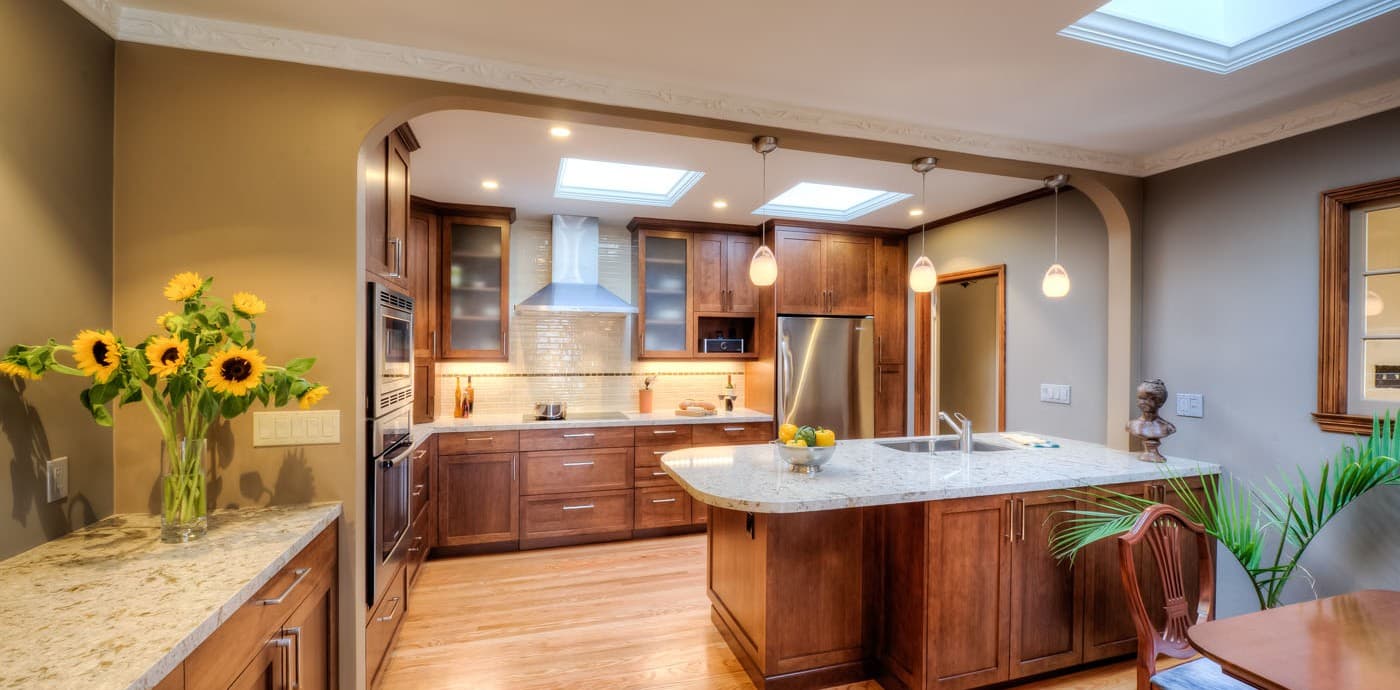
Design-Build for San Francisco Kitchens
Kitchen remodels are a great example of why design-build matters.
San Francisco kitchens are often small, have outdated systems, and are separated from dining or living areas by walls. Homeowners may want an open layout, more storage, better lighting, or a more modern feel.
A design-build team can evaluate early whether:
- A wall is load-bearing.
- Plumbing can be moved.
- The electrical service needs upgrading.
- Ventilation can be improved.
- A peninsula or island will fit.
- Permits will be required.
- The layout works within the budget.
This kind of teamwork helps prevent a common problem: designing a dream kitchen that ends up being too expensive or hard to build.
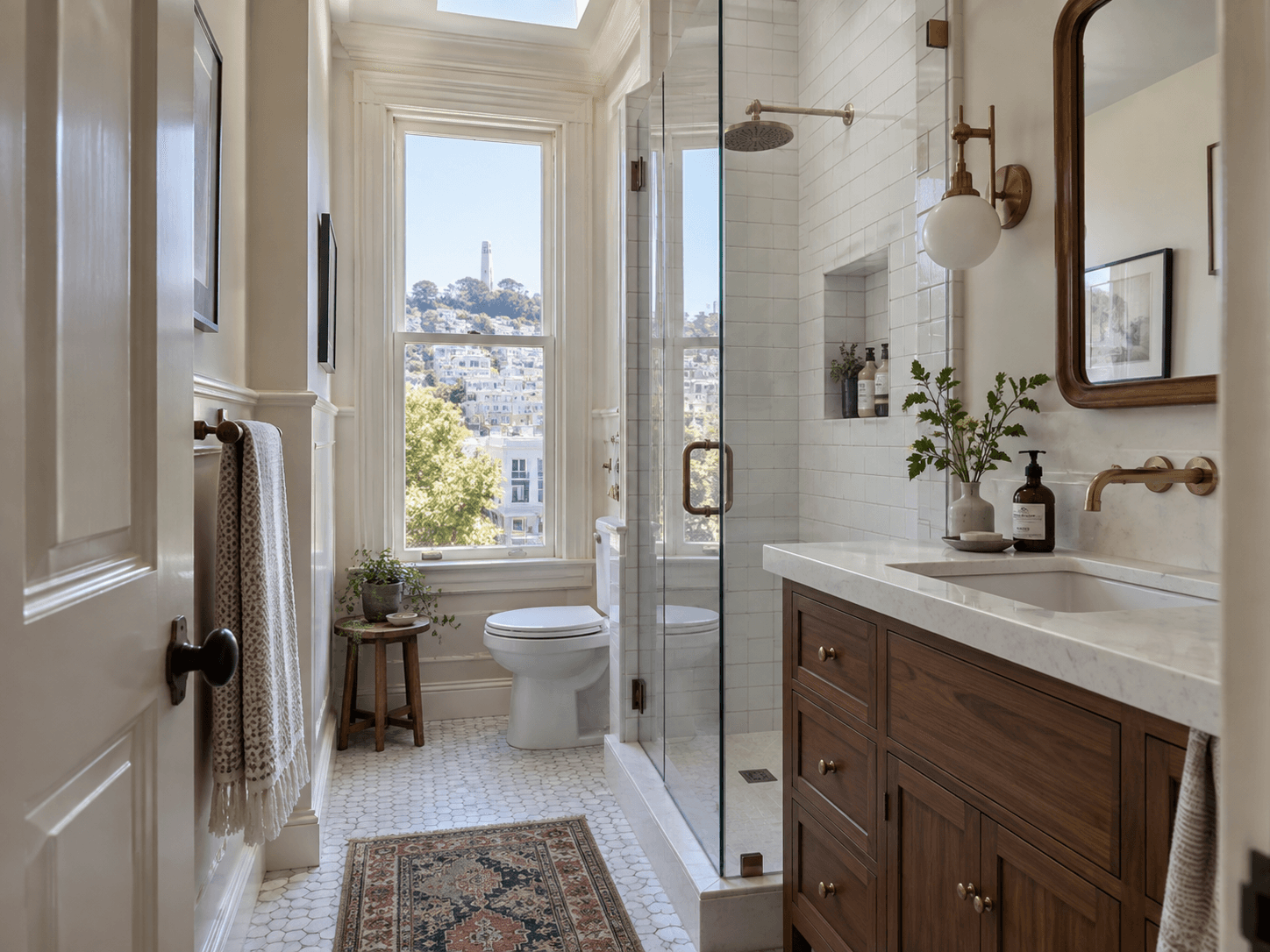
Design-Build for San Francisco Bathrooms
Bathrooms also benefit from a team approach. Many San Francisco bathrooms are small, outdated, and limited by where the plumbing is. Older homes might need better waterproofing, improved ventilation, electrical updates, or new plumbing.
A design-build firm can help homeowners determine whether to:
- Keep the same layout.
- Convert a tub to a walk-in shower.
- Add recessed storage
- Improve ventilation
- Upgrade plumbing lines
- Install better lighting
- Select moisture-resistant materials
Even though bathrooms are small, they are technically complex, so getting input from the construction team early is very helpful.
Design-Build for Victorian and Older Homes
San Francisco’s historic homes need a careful balance between updating and preserving their character. Homeowners often want to open up layouts, update systems, and make the home more comfortable without losing its original charm.
A design-build team can help plan around:
- Original trim and millwork
- Structural limitations
- Seismic upgrades
- Foundation conditions
- Outdated electrical and plumbing
- Permit requirements
- Historic façade considerations
This is where the difference between design-build and the traditional general contractor model really stands out. The sooner the construction team understands the home’s condition and design goals, the better the results.
Design-Build for Condo Remodels
Condo remodels come with their own set of challenges. Homeowners have to think about HOA rules, shared plumbing, structural limits, soundproofing, elevator access, and building work hours.
A design-build firm can help homeowners avoid designing changes that will later be rejected by the HOA or building management.
Common condo remodel considerations include:
- Whether plumbing can move
- Whether walls are structural
- Flooring sound ratings
- Appliance venting rules
- Work hour restrictions
- Insurance requirements
- Material delivery logistics
For condo owners, planning ahead can save a lot of time and frustration.
Cost Comparison: Design-Build vs. General Contractor
Some homeowners think hiring a general contractor after the design is finished will cost less. It can look that way at first. But the total cost of a remodel depends on more than just the construction contract.
A traditional model may include separate fees for:
- Architectural design
- Engineering
- Interior design
- Estimating
- Revisions
- Project coordination
- Construction
- Change orders
Design-build often combines many of these services into one process. The advantage is not always a lower starting price, but usually better budget control, fewer redesigns, and fewer expensive surprises.
For San Francisco homeowners, value comes from reducing uncertainty. A well-managed project with good planning can end up costing less than a low bid that grows with change orders.
Questions to Ask Before Choosing a Remodeling Partner
Before deciding between design-build and a general contractor, homeowners should ask:
- Who will be responsible for design decisions?
- Who will manage permits and approvals?
- When will construction pricing be developed?
- How are change orders handled?
- Who coordinates engineers and consultants?
- What happens if the project exceeds budget?
- Who is accountable if plans are difficult to build?
- How often will I receive project updates?
- Has the team worked on San Francisco homes like mine?
- Does the team understand local permitting and site logistics?
The answers to these questions will show if your project needs just a construction partner or a more integrated design-build team.
Which Approach Is Best for San Francisco Homeowners?
There is no one-size-fits-all answer. A general contractor might be right for a simple remodel with finished plans. But for many San Francisco homeowners, design-build is a more efficient, coordinated, and predictable option.
Design-build is especially helpful when the project is complex, uncertain, or involves big decisions. In a city where remodeling often means dealing with structural issues, permit challenges, old homes, and tight spaces, having one team can make the whole process smoother.
When choosing between design-build and general contractor options in San Francisco, the best choice depends on how much guidance, coordination, and accountability you want during your project.
If you want one team to handle everything from start to finish, design-build is often the smarter choice.
Ready to Plan Your San Francisco Remodel?
Podesta Construction is a San Francisco design-build firm that helps homeowners handle complex remodels with clear guidance, quality work, and a fully integrated process.
Whether you are planning a kitchen renovation, bathroom remodel, condo update, Victorian home restoration, addition, or whole-home transformation, our team can guide you through every step—from design and planning to permits, construction, and completion.
Book a consultation today to discuss your project and discover whether design-build is the right fit for your San Francisco home.
Recent Posts
Can You Add a Bathroom Anywhere in a San Francisco Home?
You usually can’t add a bathroom anywhere you want...
September 7, 2026
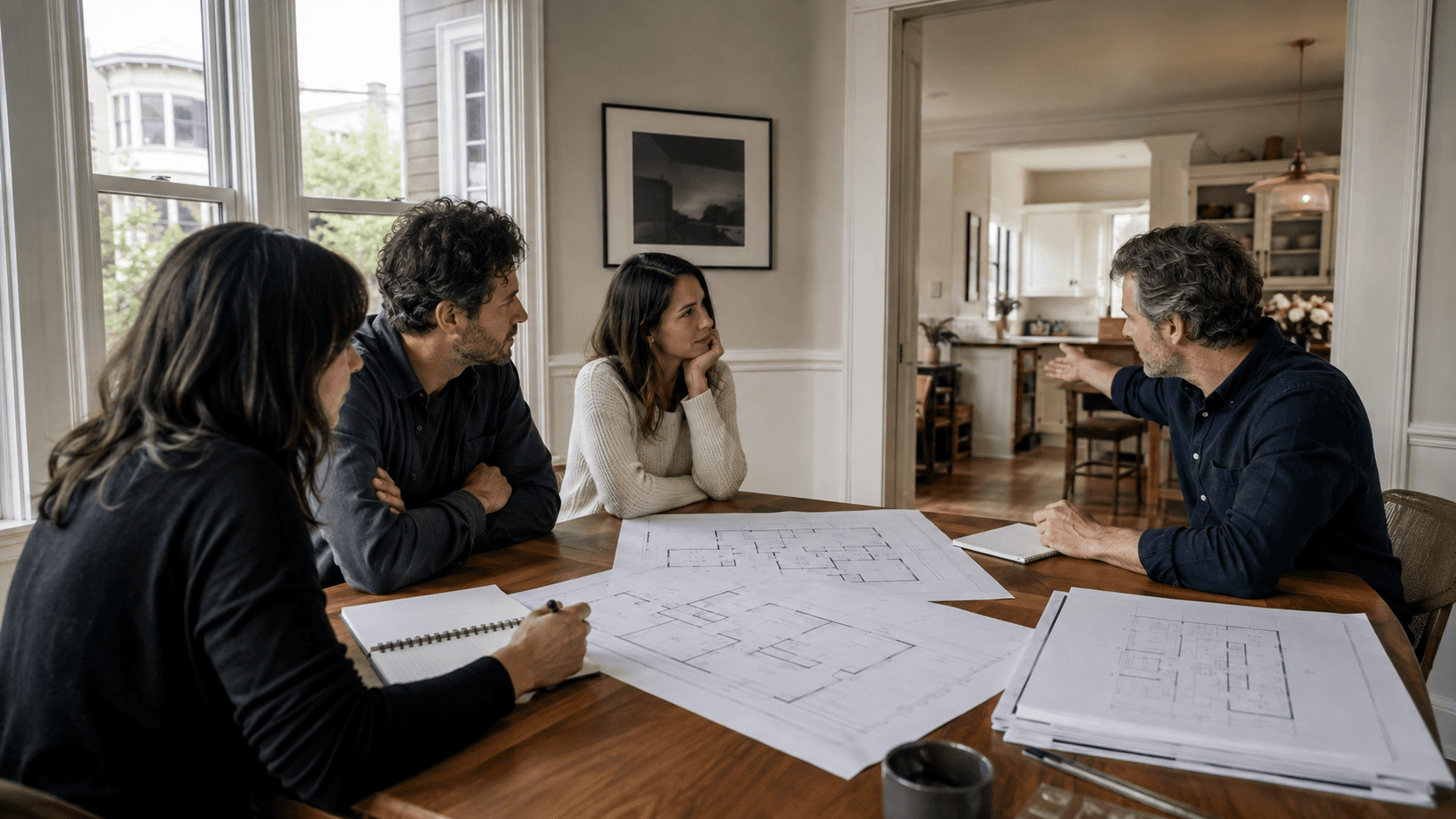
Five Decisions to Make Before Design Work Begins
A useful remodel planning checklist starts with fi...
September 1, 2026
What Should a Pre-Construction Agreement Include?
A pre-construction agreement should explain exactl...
August 5, 2026

What’s Hiding Behind the Walls of an Older San Francisco Home?
Older San Francisco homes often have a few surpris...
August 4, 2026

Remodel, Add On, or Build New? A San Francisco Property Decision Guide
If your San Francisco home no longer works for the...
June 17, 2026
How to Make a Narrow San Francisco Home Feel Wider
A narrow San Francisco home does not always need m...
June 1, 2026
Newsletter
Quarterly remodeling tips & case studies.