
April 10, 2026
Condo Remodel San Francisco: What You Can and Can’t Change
Planning a condo remodel in San Francisco is exciting, but it follows different rules from remodeling a single-family home. Condo owners usually have less flexibility since they share walls, floors, ceilings, plumbing, and building rules with neighbors.
This does not mean your renovation options are limited. With good planning, a condo remodel can greatly improve comfort, function, storage, style, and resale value. The key is to know what you can change, what needs approval, and what is restricted.
If you are remodeling for the first time, this guide will help you understand what San Francisco condo owners need to know before starting a renovation.
Why Condo Remodels Are Different in San Francisco
San Francisco condos are usually in multi-unit buildings where your ownership ends at your unit’s interior walls. Some parts belong to you, but others are managed by the homeowners association, building management, or shared systems.
A typical SF condo renovation may involve approvals from:
- The HOA or building management
- The City and County of San Francisco
- A structural engineer
- Building inspectors
- Sometimes neighbors, depending on building rules
Before you start designing, review your HOA documents, building alteration agreements, insurance needs, work-hour rules, and permit requirements. Doing this early can help you avoid costly changes later.
What You Can Usually Change in a San Francisco Condo Remodel
You can make many interior upgrades in a condo, especially if they do not affect shared systems or the building’s structure.
1. Cabinets, Countertops, and Built-Ins
You can usually replace or redesign kitchen and bathroom cabinets, as long as any plumbing or electrical changes follow code. This is a great way to modernize your condo without running into major restrictions.
For example, a homeowner in SoMa might keep the sink where it is but swap out old cabinets for full-height storage, a bigger pantry, and a better countertop layout.
2. Interior Finishes
Most condos allow updates to finishes such as:
- Paint
- Tile
- Countertops
- Backsplashes
- Hardware
- Lighting fixtures
- Interior doors
- Trim and molding
These upgrades can make a big visual difference without changing the building’s shared systems.
3. Lighting and Electrical Fixtures
You can often update lighting, add recessed fixtures, improve under-cabinet lights, or replace old switches and outlets. Just make sure all electrical work complies with code, and check whether you need permits for any changes.
In older San Francisco condos, the electrical panel’s capacity might limit what you can add.
4. Bathroom and Kitchen Fixtures
You can usually replace faucets, sinks, toilets, tubs, and showers if you keep them in the same spot. Sometimes you can convert a tub to a shower, depending on the plumbing and waterproofing requirements.
For many first-time remodelers, this is a great way to update a bathroom without major structural work.
What You May Be Able to Change With Approval
Some upgrades are possible, but they often need HOA approval, city permits, engineering review, or sometimes all three.
1. Non-Load-Bearing Walls
You might be able to remove or change a non-load-bearing wall if it does not affect the structure, fire safety, plumbing, electrical, or sound control.
For example, a condo owner in Mission Bay might want to open up a kitchen wall to connect the kitchen to the living area. If the wall is not structural and does not have major utilities, this change could be possible with the right approvals.
2. Flooring
Flooring is commonly controlled by the HOA. Many San Francisco condo associations require certain sound ratings for underlayment to help reduce noise between units.
You may be able to use hardwood, engineered wood, luxury vinyl plank, or tile, as long as they meet building requirements.
Before you pick flooring, make sure to check:
- Approved materials
- Required acoustic underlayment
- Installation rules
- Documentation needed for HOA approval
3. Plumbing Adjustments
You might be able to make small plumbing changes, but moving major fixtures is often restricted. Shared plumbing stacks run through several units, so moving sinks, toilets, showers, or kitchen plumbing can be difficult.
When remodeling a condo kitchen, it is usually best to keep the sink and dishwasher close to the existing plumbing.
4. Ventilation and Range Hoods
Changing kitchen or bathroom ventilation can be restricted because ducts often connect to shared systems or exterior walls managed by the HOA.
For example, a homeowner in Nob Hill might not be allowed to add a new exterior vent through the building’s façade. In that situation, a good recirculating range hood could be a better option.
What You Usually Can’t Change in a Condo Remodel
Some parts of your condo are usually off-limits because they belong to the building or affect other units.
1. Load-Bearing Walls and Structural Components
Structural walls, columns, beams, slabs, and shear walls are usually managed by the building. Removing or changing them needs a lot of engineering and HOA approval, and sometimes is not allowed at all.
Do not assume you can remove a wall just because of how it looks.
2. Shared Plumbing Stacks
Toilets, kitchen sinks, showers, and laundry drains often connect to shared plumbing stacks. Moving these can affect your neighbors and may not be allowed.
That is why many successful condo remodels in San Francisco focus on improving layout and function without moving plumbing.
3. Exterior Windows and Building Façade
Windows, balconies, exterior walls, and façade features are usually considered common property. Replacing windows or changing exterior openings often needs HOA approval and city review.
In historic or architecturally important buildings, exterior changes are often very limited.
4. Major HVAC or Mechanical Systems
Heating, cooling, exhaust, and fire-safety systems might be shared or regulated by building rules. Any changes should be reviewed carefully before you start designing.
Permits for a Condo Remodel in San Francisco
Not every cosmetic upgrade needs a permit, but many condo remodels do. You will usually need permits for:
- Electrical work
- Plumbing changes
- Structural modifications
- Bathroom remodels involving waterproofing or fixtures.
- Kitchen remodels involving electrical or plumbing.
- Wall removal
- Ventilation changes
A design-build firm can help you figure out which permits you need and coordinate plans before any work starts.
HOA Approval: What First-Time Remodelers Should Expect
If you are remodeling a condo for the first time, getting HOA approval can be one of the most confusing steps.
Your HOA may request:
- Scope of work
- Contractor insurance
- Construction schedule
- Permit documents
- Flooring specifications
- Noise-control plan
- Building access plan
- Neighbor protection procedures
Common rules might include limited construction hours, reserving the elevator, requirements for debris removal, and protecting shared areas.
Getting HOA approval early can help you avoid delays when it is time to start construction.
Realistic Condo Remodel Examples
Example 1: Kitchen Upgrade Without Moving Plumbing
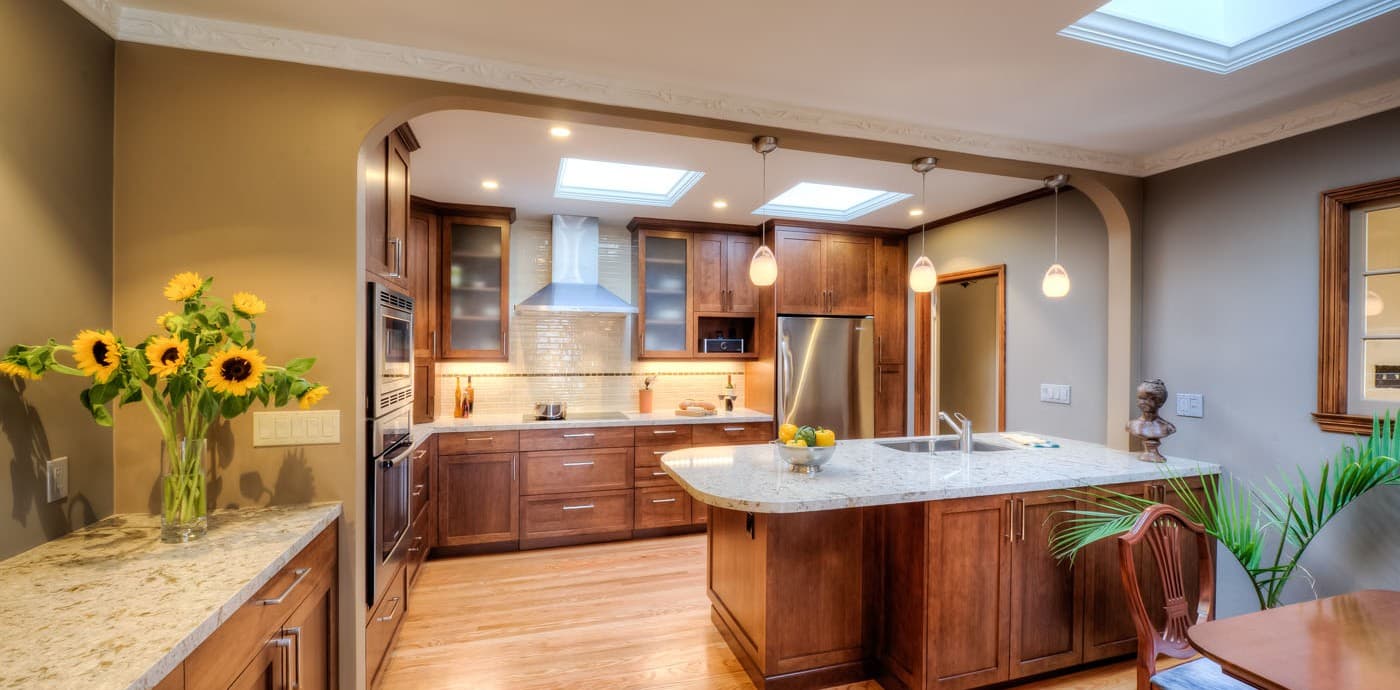
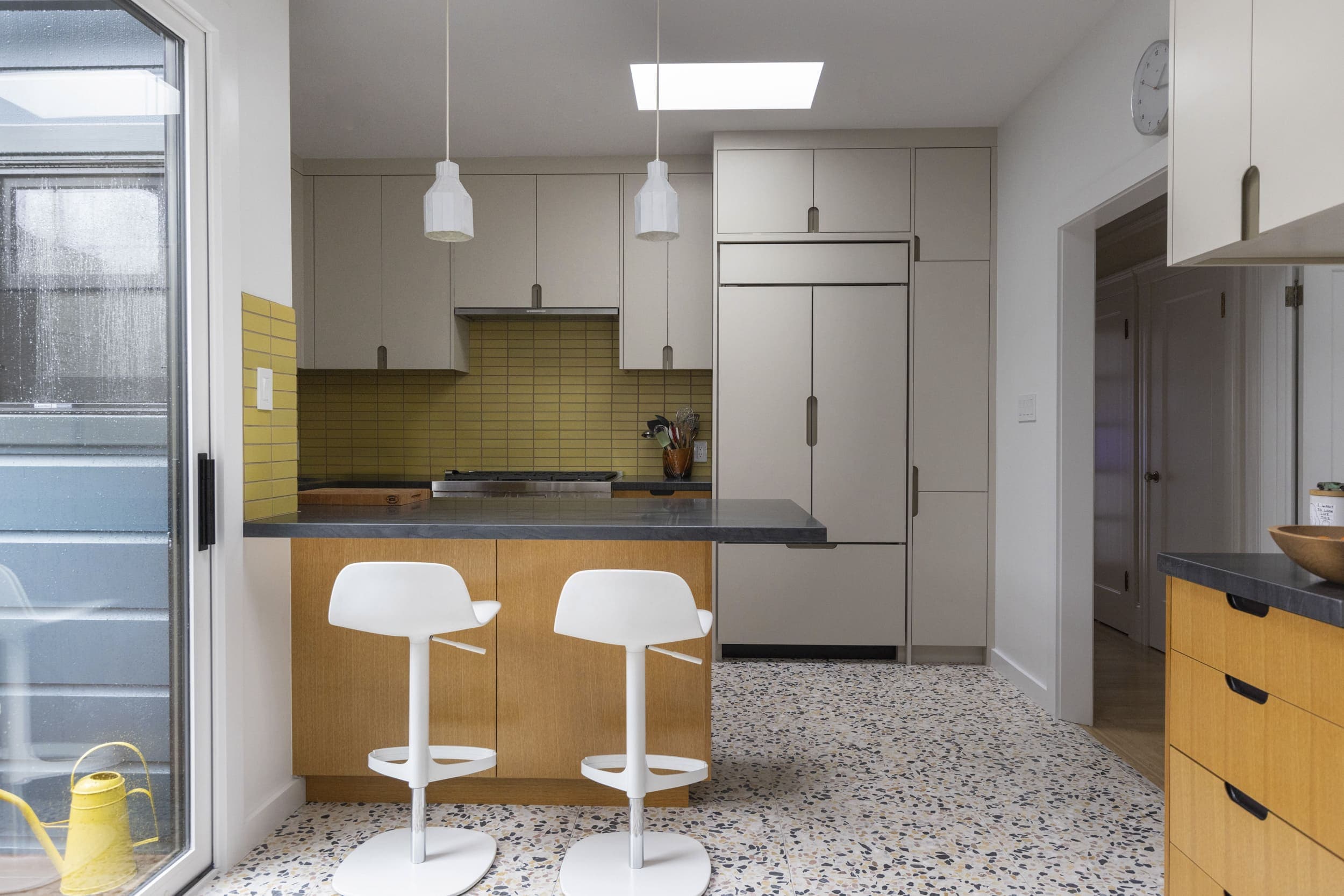
A Pacific Heights condo owner wants a more functional kitchen but cannot move the sink due to shared plumbing. The design-build team keeps the sink in place, replaces cabinets, adds better storage, upgrades lighting, and features a peninsula for seating.
Result: a more open, modern kitchen without major plumbing relocation.
Example 2: Bathroom Remodel With Better Storage
A Russian Hill condo bathroom feels cramped. Instead of making the space bigger, the remodel adds a floating vanity, recessed medicine cabinet, walk-in shower, better lighting, and new tile.
Result: the bathroom feels larger and functions better without changing structural walls.
Example 3: Flooring Upgrade With HOA Sound Requirements
A Marina condo owner wants engineered wood floors. The HOA requires acoustic underlayment with certain sound ratings. The remodel team picks materials that meet the rules and provides the needed paperwork before installation.
Result: a stylish flooring upgrade that follows building rules.
Why Design-Build Helps With San Francisco Condo Remodels
A condo remodel is more than just design and construction. It also means working with the HOA, building management, city permitting, engineers, and contractors.
A design-build firm can make things easier by handling:
- Feasibility planning
- HOA requirements
- Design options
- Budget expectations
- Permit coordination
- Construction scheduling
- Communication during the project
For first-time remodelers, this all-in-one approach lowers stress and helps you avoid unwanted delays.
Final Takeaway
A condo remodel in San Francisco can add a lot of value, comfort, and function, but success depends on knowing the rules before you start construction.
You can usually update finishes, cabinets, fixtures, lighting, storage, and many other interior details. With approval, you might be able to change walls, flooring, plumbing, or ventilation. But structural systems, shared plumbing, exterior parts, and major mechanical systems are often restricted.
With the right design-build team, you can create a beautiful, efficient, and compliant remodel that fits San Francisco’s condo rules.
Ready to Plan Your Condo Remodel?
Podesta Construction helps San Francisco homeowners with condo remodels by offering clear planning, thoughtful design, and expert construction management.
If you are thinking about renovating your SF condo, our design-build team can help you see what is possible, what needs approval, and how to move forward with confidence.
Book a consultation today to start planning your San Francisco condo remodel.
Recent Posts

Can You Add a Bathroom Anywhere in a San Francisco Home?
You usually can’t add a bathroom anywhere you want...
September 7, 2026

Five Decisions to Make Before Design Work Begins
A useful remodel planning checklist starts with fi...
September 1, 2026

What Should a Pre-Construction Agreement Include?
A pre-construction agreement should explain exactl...
August 5, 2026

What’s Hiding Behind the Walls of an Older San Francisco Home?
Older San Francisco homes often have a few surpris...
August 4, 2026

Remodel, Add On, or Build New? A San Francisco Property Decision Guide
If your San Francisco home no longer works for the...
June 17, 2026
How to Make a Narrow San Francisco Home Feel Wider
A narrow San Francisco home does not always need m...
June 1, 2026
Newsletter
Quarterly remodeling tips & case studies.